projects
POTUS2024

ancestral line of anti-democrats 2024


to be continued…
green living 2024
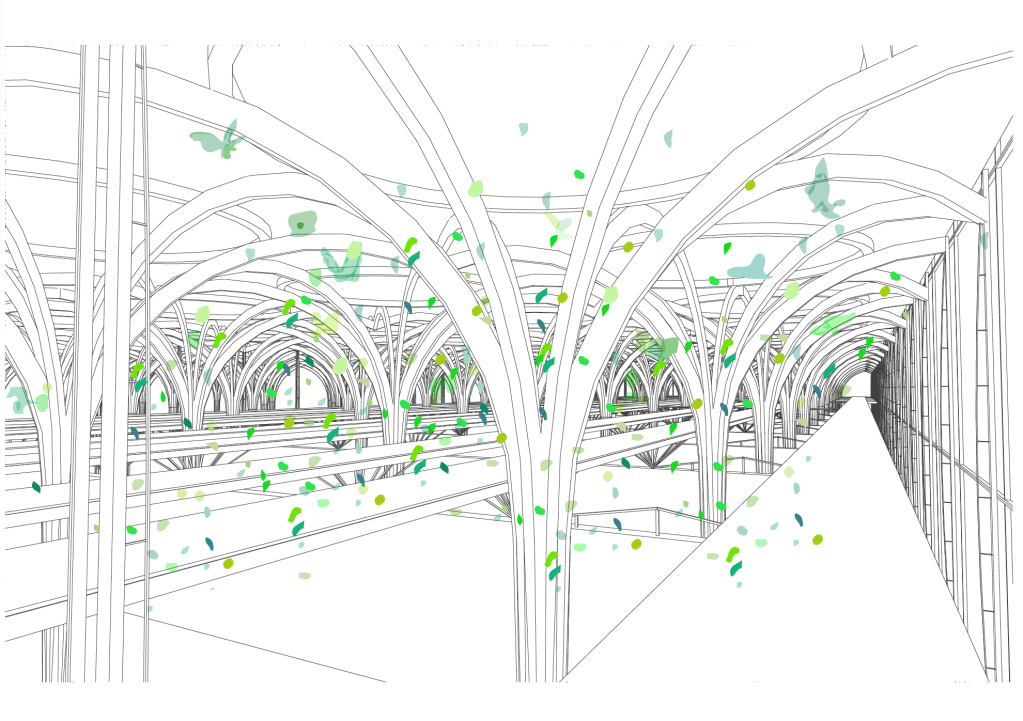
revitalize & redevelop human – nature relationship
Hydroponics
365 days/year
locally grown food | no transport (costs)
greens grow 3x faster than in a field
using 90% less H2O & with no need for soil or sunlight
occupying less space
high quality plants | e.g., salad, aubergine, zucchini, strawberry
soccer field = 50.000 people/year
low socio-economic status correlates with low fruit & vegetable consumption
relief 2021

help – support – liberation – easement – inheritance – relief
a symbol for Afghanistan
Iconic images and calls for help from Afghanistan addressed to the world are currently shaping international reports. Their focal point was the airlift at Kabul airport. Debates broke out over calls for help that were heard but not answered or could no longer be answered. Such manifested calls for help that are clearly audible or visible by the recipient, but which are insufficient and therefore do not necessarily lead to assistance, can worsen the situation of those seeking help. At the same time, they can be a sign that the situation can no longer become more threatening. However, this also applies to latent, i.e., not directly detectable, calls for help. In addition to the risk of failure to provide assistance, they harbor two further risks. On the one hand, it is unclear whether the addressed recipients are able to recognize the call for help as such and, on the other hand, it is unclear whether they do this faster than those from whom the danger emanates. Here, the factor of time is relevant both before and after decoding. In addition to the questions of how quickly and for how long, there is also the central question of how help should be provided. Despite clear words, Morse codes or hand signals that mark human need, the process from looking for help to providing help is diverse in its design. It is precisely this diversity of encoding and decoding against the background of time that facilitates failure to render assistance. Afghanistan’s history of neglected and failed aid attempts is long and continues to have an impact today. Among other things, they are the result of the separation of the Pashtuns by the Durand Line, the community of scholars of Islam, the wars of liberation that initially took place along ethnic borders, the occupation by the Soviet Union whose mines still make agriculture dangerous in some regions, the fratricidal war which killed almost two million people and left behind the greatest poverty and famine to date, the Taliban regime, and even just the last 20 years. No other country has changed its flag so often. Changes in rulers went hand in hand with the targeted destruction of towns, buildings and monuments as a demonstration of power, in order to create space for a new symbolic language. A visual and symbolic language for the instability of the country, which evokes radicalism and attracts interested parties. It is a breeding ground for warlords, drug trafficking, corruption, terrorism, non-altruistic goals of neighboring countries and is associated with merciless violence. Violence that, from an anthropological point of view, turns breadwinners into torturers and murderers. Endangered breadwinners who are no longer able to provide for themselves or to protect their family members. Humanitarian aid partially covered the evident needs. The latent needs partially found their way into the Koran schools of extreme Islamists. They manifest themselves today in Sharia thinking, of which’s background is indicative of unrecognized, outrageous and dysfunctional aid in Afghanistan’s history.
The present in Afghanistan is threatening and the future uncertain, with gloomy prognoses. The calls for help have increased immeasurably since the Doha Agreement. They must be seen in their entirety for an indefinite period of time. The images of Hamid Karzai Airport, with their associations to the images of September 11th twenty years ago, and the images of the US withdrawal from Saigon in 1975, show their powerful effect. They represent the need and desperation on-site. However, they do not symbolize the failures of the past decades. They do not offer a reflective, nor a projective measure for deciphering calls for help and assistance. Perhaps these are the connections that Afghanistan and the world need in the long term.
The shape of the sphere symbolizes the uniqueness of the words, Morse codes and hand signals for help. Regardless of the perspective, the ball is always such and thus recognizable as a cry for help. The relief of the sphere indicates the complexity of articulation, performance and the obtainment of aid, as well as the inheritance of neglected help. The inner perspective of the ball is symbolic of sensations that precede and accompany a call for help. The rays of light stand for the hope of support and liberation from the emergency situation associated with a call for help. It remains to be seen whether the hoped-for alleviation will come about.
 picto4democracy